Views: 666 Author: Site Editor Publish Time: 2025-11-06 Origin: Site


When you start a clothing brand, one of the biggest decisions you’ll face is choosing the right clothing manufacturer. Should you work with a local partner close to home — or take advantage of the lower costs and scale offered by overseas production? The truth is, both options have unique benefits and challenges that can make or break your business.
In today’s global fashion market, your manufacturing decision shapes everything — from product quality and delivery time to pricing and brand image. Whether you’re a startup launching your first collection or an established label scaling internationally, understanding the pros and cons of each option will help you choose wisely.
Let’s break it down step by step — so you can confidently decide which path fits your brand’s goals, budget, and vision.
Before you can choose, it’s essential to understand what “local” and “overseas” really mean in fashion production.
A local clothing manufacturer is one based in your own country — for example, a U.S. or U.K. apparel factory that handles design, sampling, and production. An overseas manufacturer, on the other hand, is located in major production hubs such as China, Bangladesh, Vietnam, India, or Turkey.
The difference isn’t just geography — it’s cost structure, production speed, communication style, and even mindset. Local factories usually offer smaller runs, easier communication, and faster logistics. Overseas manufacturers focus on high volume, lower labor costs, and access to vast material networks.
As global fashion supply chains evolve, many brands now adopt hybrid models — sampling or prototyping locally, then moving to overseas partners for mass production. The key is knowing how each type supports your goals.
Working with a local clothing manufacturer can feel like having your production team next door — and that comes with huge benefits.
Faster communication is the biggest plus. You can visit the factory, hold face-to-face meetings, or adjust samples in person. Misunderstandings get solved immediately instead of through long email threads.
Quality control is also much easier. You can review production on-site, check materials, and ensure your garments meet local standards. For brands that pride themselves on “Made in USA” or “Made in Europe,” local production also strengthens your brand image.
And then there’s speed. Without overseas shipping or customs delays, local production means shorter lead times. This allows you to restock faster and respond quickly to market trends — something fast fashion brands have mastered.
Finally, local manufacturing can boost sustainability. Reduced carbon emissions from shipping and better labor oversight make it a more eco-friendly choice.
Of course, every coin has two sides. The biggest drawback of local manufacturing is cost.
Wages, materials, and overhead expenses in developed countries are significantly higher, driving up your per-unit production cost. For emerging brands with tight budgets, that can make local production unfeasible — especially when competing with fast, low-cost overseas suppliers.
Local factories also tend to have limited capacity. Many specialize in smaller runs or niche products, meaning scaling up production could become challenging. If your orders suddenly double, they may not have the space, staff, or machinery to meet demand.
And while quality is often better, not every local factory has access to the same range of fabrics, trims, or advanced technology that overseas hubs provide. So, if you’re after special materials or complex designs, your local options may be restricted.
In short, local production offers control and quality — but at a higher price and with limited flexibility.
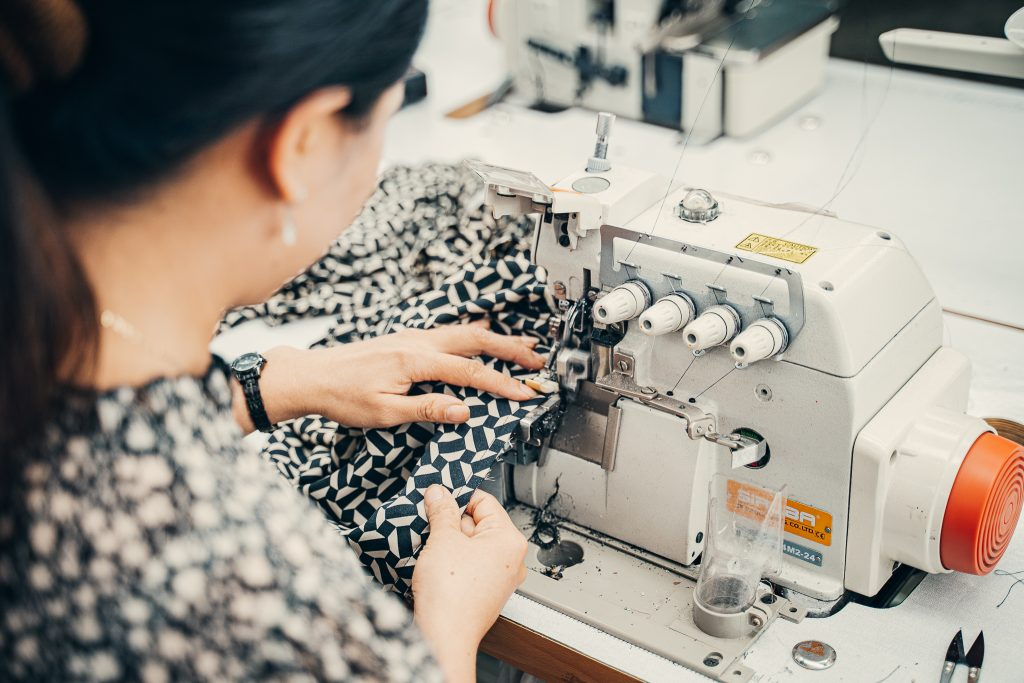
Now, let’s talk about the powerhouse of global fashion: the overseas clothing manufacturer.
The most obvious advantage is cost efficiency. Labor and operational costs in countries like China, Vietnam, or Bangladesh are far lower, allowing you to produce more at competitive prices. That’s why so many global brands — from high street to luxury — have overseas production lines.
Beyond pricing, overseas manufacturers offer unmatched scalability. Whether you need 100 or 10,000 units, they can handle it. Their factories are designed for efficiency, with entire teams dedicated to cutting, stitching, quality control, and packaging.
You’ll also find greater material diversity. Many overseas hubs have extensive textile supply chains, giving you access to a wide range of fabrics, buttons, prints, and accessories — often under one roof.
In other words, overseas manufacturing helps you lower costs, increase volume, and expand your product line without huge upfront investment. For growing brands, that can be a game-changer.
But overseas production comes with real challenges — especially for brands that value agility and precision.
The biggest concern? Distance and communication barriers. Time zones, language differences, and cultural gaps can make it harder to get quick updates or resolve issues. A simple design adjustment can take days to communicate and execute.
Then there’s longer lead time. Between production, quality checks, shipping, and customs, your products might take months to arrive. This limits flexibility for seasonal collections or rapid restocking.
Quality control can also vary. Some overseas factories produce exceptional work, but others may cut corners without strong supervision. That’s why pre-production samples and third-party inspections are essential.
Finally, logistics add complexity — from freight delays to fluctuating shipping costs. One global event (like COVID-19 or port strikes) can disrupt the entire supply chain.
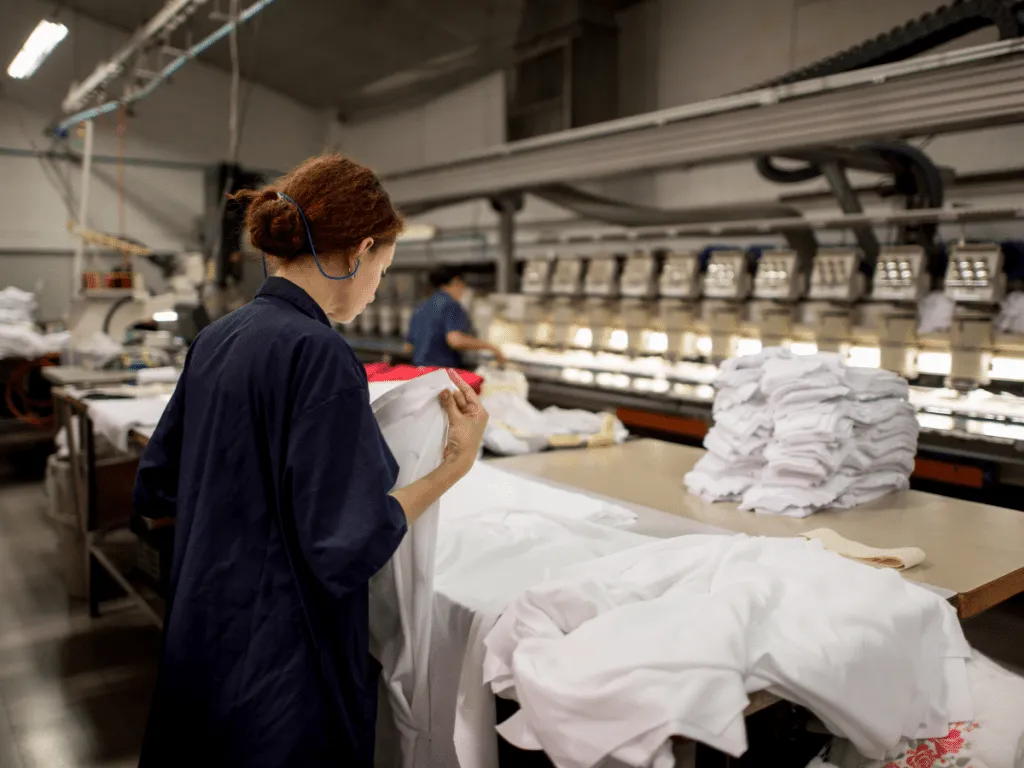
| Factor | Local Clothing Manufacturer | Overseas Clothing Manufacturer |
|---|---|---|
| Production Cost | High | Low |
| Lead Time | Short | Long |
| Communication | Easy & direct | Time zone & language barriers |
| Quality Control | Easier to monitor | Requires third-party checks |
| Scalability | Limited | Excellent for mass production |
| Material Access | Limited locally | Extensive global sourcing |
| Sustainability | Easier to verify | Varies by region |
| Logistics | Simple & fast | Complex (customs, shipping) |
| Brand Image | “Made locally” appeal | Global cost advantage |
This table makes it clear — there’s no universal winner. The best choice depends entirely on your brand strategy and business model.
Cost is often the deciding factor. Local manufacturers might charge $25–$40 per piece, while overseas suppliers could offer similar garments for $8–$15 — depending on fabric, quantity, and design.
But don’t let low unit prices fool you. There are hidden costs:
Shipping and customs duties
Rework or replacements for quality issues
Currency exchange fluctuations
Import taxes or compliance fees
When you factor in everything, the difference may narrow. That’s why smart brands calculate total landed cost — the full expense of getting your product from factory to warehouse. A slightly higher upfront price from a local factory could save you money in the long run if it means fewer errors and faster turnaround.
Quality can make or break your brand reputation. Local factories make it easy to monitor production firsthand. You can drop by anytime, evaluate samples on-site, and ensure your standards are met.
Overseas production, however, requires trust and systems. Many brands hire third-party inspection agencies to check bulk orders before shipping. Factories in China, Bangladesh, and India are used to this process and often cooperate with international testing standards like ISO, WRAP, or BSCI.
Always request pre-production samples (PPS) and TOP samples (Top of Production) before approving the full batch. This ensures your manufacturer fully understands the design, fabric, and finishing details you expect.
The golden rule? Never skip sampling — it’s your best safeguard against costly surprises.
Today’s consumers care deeply about how and where their clothes are made. Working with a local clothing manufacturer often aligns better with eco-friendly and ethical values. Shorter supply chains mean fewer emissions, and compliance with strict labor laws ensures fair working conditions.
That said, many overseas factories have made tremendous progress. Certified facilities with OEKO-TEX, BSCI, or WRAP labels follow international sustainability and social responsibility standards.
If sustainability is part of your brand DNA, ask for documentation and audit reports. Ethical manufacturing is no longer a “nice-to-have” — it’s part of your brand story and competitive edge.
When you’re working with a local partner, communication feels natural. Same time zone, same language, same business culture. You can hop on a quick call or visit in person.
With overseas production, however, time zone gaps can slow everything down. Sending feedback at night means waiting another 24 hours for a reply. Add language barriers, and misunderstandings can pile up fast.
To avoid this, set up clear communication routines. Use collaboration tools like Trello, Slack, or Google Sheets to track progress. Always confirm changes in writing, and document all approvals. A great overseas partner will adapt to your workflow — that’s how you build trust across borders.
There’s no one-size-fits-all answer. Your decision should reflect your brand’s size, values, and market position.
If you’re an emerging brand that values quality, transparency, and local craftsmanship — go local. You’ll gain control, credibility, and faster delivery times.
If you’re scaling up and need to produce thousands of units at competitive prices — go overseas. You’ll benefit from cost efficiency and production capacity.
Many successful fashion labels use a hybrid approach: local for sampling and small runs, overseas for bulk orders. This way, they balance flexibility, quality, and cost-effectiveness.
Choosing between a local or overseas clothing manufacturer isn’t just a logistics decision — it’s a strategic one. It determines your pricing, speed, and even brand reputation.
There’s no universal winner here. Local production gives you control, speed, and storytelling power. Overseas manufacturing delivers scalability, diversity, and affordability. The best brands understand both — and build strong relationships that combine the strengths of each side.
At the end of the day, what matters most is trust, transparency, and communication. When you find a manufacturing partner that shares your values and delivers consistently, you’ve found the real key to long-term brand success.
1. Is it better to work with a local or overseas clothing manufacturer?
It depends on your priorities. Local production offers speed and control, while overseas factories offer cost efficiency and scale.
2. How can I ensure quality with overseas production?
Request pre-production samples, work with certified factories, and use third-party quality inspections before shipping.
3. What’s the biggest hidden cost in overseas manufacturing?
Shipping delays, import duties, and unexpected rework expenses can significantly raise total costs.
4. Can I combine local and overseas production?
Yes. Many brands design and sample locally, then scale overseas to balance quality with affordability.