Views: 150 Author: Site Editor Publish Time: 2026-07-03 Origin: Site


Most clients don’t think much about 1cm.
In most cases, they shouldn’t have to.
A centimeter sounds like nothing.
It’s smaller than what you notice when you’re wearing a hoodie, a T-shirt, or a jacket in daily life.
But in garment development, 1cm is not “small”.
It’s often the difference between two completely different garments.
We had a hoodie project where everything was already approved.
Sample was confirmed. Fabric was locked. Pattern graded. Production prep was done.
Then the client sent a short message.
“Can we make the sleeve 1cm longer?”
That’s it.
One line.
No urgency. No pressure.
Just a simple adjustment request.
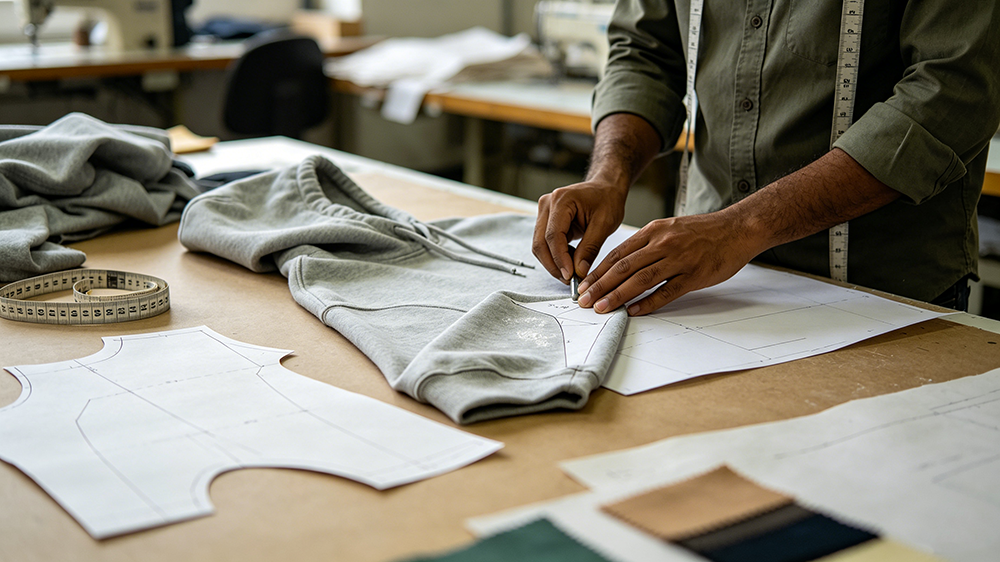
On paper, it looked harmless.
1cm increase on sleeve length doesn’t sound like a structural change.
But before making the adjustment, we checked the full pattern set again.
Because in garment construction, no measurement exists alone.
A sleeve is not just a sleeve.
It connects to the shoulder slope, armhole depth, and body proportion.
Change one element, and others start shifting slightly even if you don’t intend them to.
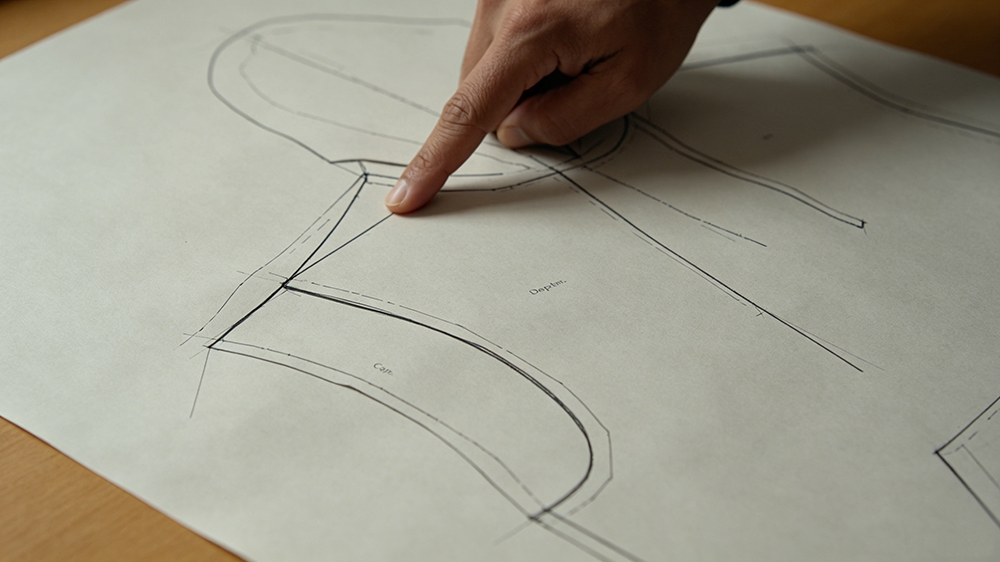
We didn’t reject the request.
We didn’t approve it immediately either.
Instead, we made a test sample with the adjusted sleeve length.
Same fabric. Same construction. Same everything else.
Only the sleeve changed.
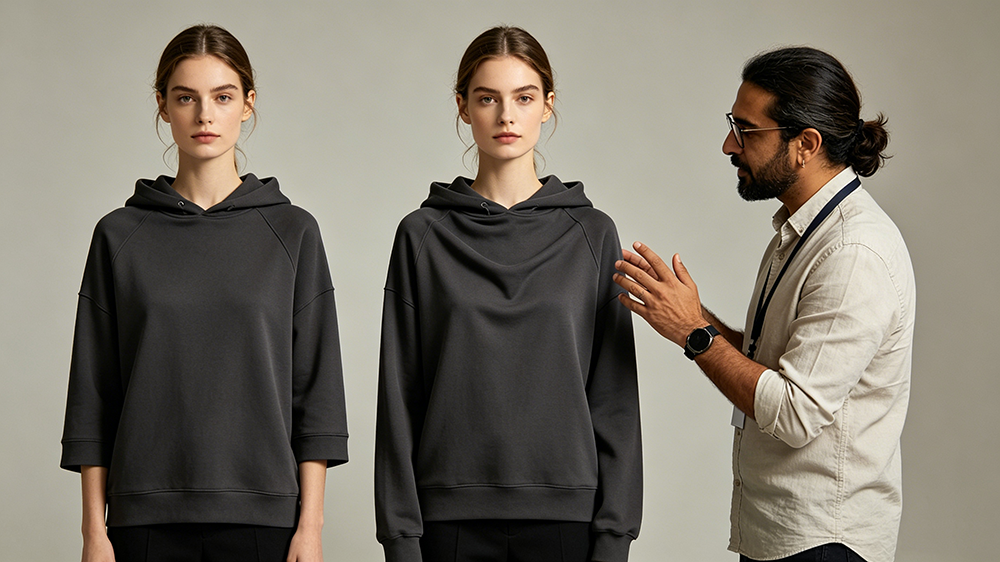
When the sample came back, the difference was not what most people expect.
It didn’t just look slightly longer.
The entire upper balance shifted.
The shoulder line appeared lower.
The hood looked heavier at the back.
Even the way the fabric draped from the chest changed slightly.
Nothing dramatic on its own.
But together, it created a different silhouette.
One of our pattern makers looked at both versions side by side and said something simple:
“It’s not just longer. It’s a different posture.”
That description was more accurate than any measurement we could have written.
Because garments don’t exist as isolated dimensions.
They exist as balance.
This is something we see often in sampling.
Small requested changes usually come from a good place.
Clients are trying to refine fit, improve comfort, or adjust aesthetics.
But the challenge is that most adjustments don’t stay local.
They spread through the pattern system.
A sleeve change affects how the shoulder reads.
A shoulder change affects how the chest drapes.
A chest change affects how the hoodie sits on the body.
In many cases, the original sample is already the result of several rounds of balancing.
So when a “small adjustment” is introduced, it is not entering a neutral system.
It is entering an already tuned structure.
That’s why the result often feels disproportionate to the change.
We usually explain it to clients in a very simple way.
If a garment were a table, you can’t shorten one leg without affecting stability.
Even if the adjustment is only 1cm, the structure reacts as a whole.
Some reactions are visible immediately.
Some only appear after washing or wearing.
In this project, we ended up keeping the original sleeve length.
Not because the request was wrong.
But because the test confirmed that the original balance worked better for the intended fit.
The interesting part was that the client agreed immediately after seeing both versions.
Not because of measurement differences.
But because of how the garment looked when worn.
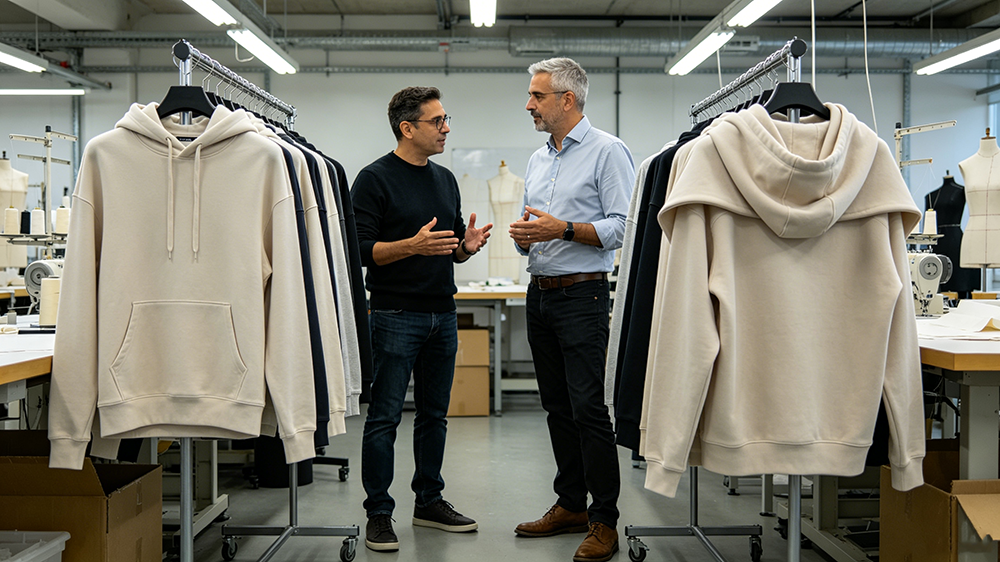
Over time, we’ve learned that pattern changes are rarely about numbers.
They are about relationships between parts.
And once those relationships are established, even the smallest modification can reset the entire balance.
That’s why in our sample room, we rarely treat “small changes” as small decisions.
We treat them as structural decisions.
Because in garment manufacturing, structure always responds as a whole.